
Financial Markets and Institutions, explored in various textbooks and PDF formats, represent a crucial field for students of finance, economics, and business.
These resources, like the eighth edition by Mishkin and Eakins, offer comprehensive analyses of modern financial systems and instruments.
The study encompasses understanding how funds are channeled, risks are managed, and payments are facilitated within the global economy.
AFF 2026 and Fintech (2025) highlight innovation and trends shaping these dynamic markets.
Overview of the Financial System
Financial systems are complex networks facilitating the flow of funds between savers and borrowers, a topic extensively covered in Financial Markets and Institutions textbooks and available in PDF form.
This system comprises various interconnected components, including financial markets – where securities are traded – and financial institutions – which act as intermediaries.
Key players encompass depository institutions like banks and credit unions, contractual savings institutions such as insurance companies and pension funds, and investment intermediaries like mutual and hedge funds.
These entities play vital roles in intermediation, risk management, and providing payment services.
Understanding the structural breakdown of these institutions is crucial, as detailed in resources dedicated to the subject.
The system’s efficiency is paramount, impacting economic growth and stability, and is a core focus of academic study and regulatory oversight.
Events like those discussed at AFF 2026 and Fintech (2025) demonstrate the system’s constant evolution.
Importance of Financial Markets
Financial markets are fundamental to economic prosperity, efficiently allocating capital from savers to borrowers – a concept thoroughly explored in Financial Markets and Institutions resources, often found as PDF documents.

They enable corporations to raise funds for investment, fostering innovation and growth, and allow individuals to finance major purchases like homes.
These markets provide platforms for managing risk through diverse instruments like derivatives, and facilitate price discovery, reflecting supply and demand.
Efficient markets are crucial for economic stability, as highlighted in analyses by Reinhart and Rogoff.
The globalization of these markets, discussed at events like Fintech (2025), expands investment opportunities.
Understanding market efficiency is vital, influencing investment strategies and regulatory policies.
Access to well-functioning financial markets is essential for sustained economic development and improved living standards.
Role of Financial Institutions
Financial institutions, detailed in resources like Financial Markets and Institutions textbooks and available in PDF format, act as intermediaries, channeling funds between savers and borrowers.
Depository institutions, such as banks and credit unions, accept deposits and provide loans, while contractual savings institutions – insurance companies and pension funds – manage long-term investments.
Investment intermediaries, including mutual and hedge funds, pool resources for diversified investment.
These institutions reduce information asymmetry, lower transaction costs, and provide risk management services.
They play a vital role in payment systems, facilitating commerce.
Their stability is paramount, as disruptions can have systemic consequences, requiring robust regulation.
Fintech innovations are reshaping their roles, demanding adaptation and innovation, as seen at AFF 2026.

Understanding Financial Markets
Financial markets, covered in textbooks and PDF resources, encompass money, capital, derivatives, and foreign exchange, facilitating investment and risk transfer.
Analyzing these markets is crucial for understanding economic dynamics.
Types of Financial Markets (Money, Capital, Derivatives, Foreign Exchange)
Financial markets are diverse, categorized into distinct types as detailed in numerous textbooks and available in PDF format. The money market facilitates short-term debt instruments, while the capital market focuses on long-term investments like stocks and bonds.
Derivative markets trade financial instruments whose value is derived from underlying assets, offering tools for hedging and speculation.
The foreign exchange market enables currency trading, crucial for international commerce and investment. Understanding these market types, as explored in resources like those by Saunders and Cornett, is fundamental to grasping the complexities of modern finance.
These markets are constantly evolving, influenced by globalization and fintech innovations highlighted at events like AFF 2026 and Fintech (2025).
Primary vs. Secondary Markets
Financial markets operate through both primary and secondary mechanisms, concepts thoroughly explained in financial markets and institutions textbooks and accessible as PDF documents. The primary market involves the initial sale of securities directly from issuers to investors, facilitating capital formation.
Conversely, the secondary market allows investors to trade previously issued securities amongst themselves, providing liquidity and price discovery.
Understanding this distinction, as detailed by Mishkin and Eakins, is vital for comprehending how capital flows and value is determined. Events like Fintech (2025) showcase innovations impacting both market types, while regulatory bodies oversee their function and stability.
Market Efficiency and its Implications
Market efficiency, a core concept in financial markets and institutions, explores how quickly asset prices reflect available information – a topic extensively covered in relevant textbooks and available in PDF format.
Efficient markets, like those discussed in academic papers comparing financial crises, imply it’s difficult to consistently “beat the market” through active trading.
Different levels of efficiency – weak, semi-strong, and strong – dictate the type of information incorporated into prices. Understanding this impacts investment strategies and the role of financial intermediaries. Fintech innovations and globalization, highlighted at events like AFF 2026, continually test and reshape market efficiency.

Key Financial Institutions
Financial markets and institutions rely on entities like banks, credit unions, insurance companies, and investment funds – detailed in various PDF textbooks.
These institutions facilitate fund flow and risk management.
Depository Institutions (Banks, Credit Unions)
Banks and credit unions, central to financial markets and institutions, are thoroughly examined in academic textbooks and accessible PDF resources. These institutions accept deposits from individuals and businesses, forming the bedrock of the financial system.
They play a vital role in intermediating funds, channeling savings into productive investments like loans to individuals and firms;
Banks, often for-profit, prioritize shareholder value, while credit unions, member-owned cooperatives, focus on providing financial services to their members at competitive rates.
Both are subject to stringent regulation, ensuring stability and protecting depositors. Understanding their operations is fundamental to grasping the broader financial landscape, as detailed in resources like those by Saunders and Cornett.
Their functions are continually evolving with fintech innovations.
Contractual Savings Institutions (Insurance Companies, Pension Funds)
Insurance companies and pension funds, key components of financial markets and institutions, are extensively covered in relevant textbooks and available as PDF documents. These institutions accumulate funds based on contractual obligations – premiums for insurance and contributions to pension plans.
They represent significant sources of long-term capital, investing heavily in financial markets.
Insurance companies manage risk by pooling premiums and paying out claims, while pension funds provide retirement income to beneficiaries. Both play a crucial role in providing financial security.
Their investment strategies impact market dynamics, as analyzed in resources like Mishkin and Eakins’ work. Regulatory oversight is paramount, ensuring solvency and fulfilling contractual obligations.
They are adapting to demographic shifts and evolving investment landscapes.
Investment Intermediaries (Mutual Funds, Hedge Funds)
Investment intermediaries, including mutual funds and hedge funds, are central to modern financial markets and institutions, thoroughly examined in academic textbooks and accessible in PDF formats. These entities pool funds from numerous investors to purchase a diversified portfolio of securities.
Mutual funds offer investors access to professional management and diversification at a relatively low cost.
Hedge funds, conversely, typically employ more complex and riskier strategies, targeting higher returns for sophisticated investors. Both types of funds contribute to market liquidity and efficiency.
Their activities are often analyzed within the context of broader market trends, as highlighted by resources like those presented at AFF 2026 and Fintech (2025). Regulatory scrutiny is increasing.

The Functions of Financial Institutions
Financial institutions, detailed in textbooks and PDF resources, perform vital functions: intermediating funds, managing risk through diversification, and facilitating efficient payment services.
These roles are key to a stable economy.
Intermediation of Funds
Financial institutions act as crucial intermediaries, channeling funds from savers to borrowers – a core function detailed in Financial Markets and Institutions textbooks and available in PDF format.
This process efficiently allocates capital, fostering economic growth by connecting those with surplus funds to those needing them for investment.
Banks, credit unions, and other intermediaries reduce information asymmetry and transaction costs, making the flow of capital smoother.
They transform savings into loans and investments, supporting businesses and individuals alike.
AFF 2026 and Fintech innovations are further streamlining this intermediation process, enhancing accessibility and efficiency.
Understanding this function is fundamental to grasping the broader financial system.
Risk Management and Diversification
Financial institutions play a vital role in identifying, assessing, and mitigating risks – a key topic explored in resources like Financial Markets and Institutions textbooks and readily available as PDF documents.
Diversification, a core risk management strategy, involves spreading investments across various assets to reduce exposure to any single risk factor.
Institutions employ sophisticated tools and techniques, including derivatives, to hedge against market fluctuations and credit defaults.
Effective risk management is crucial for maintaining financial stability and protecting investors.
The analysis of historical financial crises, like those studied by Reinhart and Rogoff, underscores the importance of robust risk controls.
AFF 2026 and Fintech advancements are also contributing to improved risk modeling and management.
Payment Services
Financial institutions are central to facilitating payments, a fundamental function detailed in Financial Markets and Institutions materials, often accessible as PDF resources and comprehensive textbooks.
These services encompass a wide range of mechanisms, from traditional check clearing to modern electronic funds transfers and digital payment platforms.
Efficient payment systems are essential for commerce and economic activity, enabling seamless transactions between individuals and businesses.
Fintech innovations, highlighted at events like Fintech (2025), are revolutionizing payment technologies, increasing speed and reducing costs.
AFF 2026 also showcases advancements in this area.
Robust payment infrastructure is vital for maintaining financial stability and supporting economic growth.

Financial Instruments and Their Characteristics
Financial Markets and Institutions textbooks, often available as PDFs, detail instruments like bonds, stocks, options, and futures—tools for financing and risk control.
Debt Instruments (Bonds, Loans)
Debt instruments, comprehensively covered in Financial Markets and Institutions resources – including readily available PDF versions of leading textbooks – represent a foundational element of the financial landscape.
These instruments, such as bonds and loans, signify borrowing and lending arrangements where the borrower promises to repay the principal amount along with interest over a specified period.
Bonds, often issued by corporations and governments, are fixed-income securities offering predictable cash flows. Loans, conversely, can be more customized, tailored to individual borrower needs, and offered by banks and other lending institutions.
Understanding the characteristics – maturity dates, interest rates, and credit ratings – of these instruments is vital for investors and financial professionals alike, as highlighted in academic materials and industry publications.
Analyzing these features allows for informed decisions regarding risk assessment and portfolio construction.
Equity Instruments (Stocks)
Equity instruments, particularly stocks, are central to the study of Financial Markets and Institutions, with detailed explanations found in numerous textbooks and accessible PDF formats.
Stocks represent ownership in a corporation, granting shareholders a claim on the company’s assets and earnings.
Unlike debt instruments, equity doesn’t obligate the issuer to fixed payments; instead, returns are derived from potential capital appreciation and dividend distributions.
These instruments are traded on stock exchanges, facilitating price discovery and liquidity. Understanding stock valuation, market capitalization, and different stock types (common vs. preferred) is crucial for investors.
Resources like those by Mishkin and Eakins emphasize the role of stocks in capital formation and economic growth, alongside the inherent risks associated with equity investments.
Derivative Instruments (Options, Futures, Swaps)
Derivative instruments – options, futures, and swaps – are complex components of Financial Markets and Institutions, thoroughly covered in academic textbooks and available in PDF study materials.
These instruments derive their value from an underlying asset, such as stocks, bonds, or commodities.
They are primarily used for hedging risk or speculation. Options grant the right, but not the obligation, to buy or sell an asset at a specific price.
Futures contracts obligate parties to transact at a predetermined future date and price, while swaps involve exchanging cash flows based on underlying variables.
Understanding these instruments requires a grasp of payoff structures, pricing models, and regulatory frameworks, as detailed in comprehensive financial market analyses.

Regulation of Financial Markets and Institutions
Financial regulation, detailed in Financial Markets and Institutions textbooks and PDF resources, is vital for stability.
Bodies like the SEC and Federal Reserve enforce rules to protect investors and markets.
Reasons for Financial Regulation
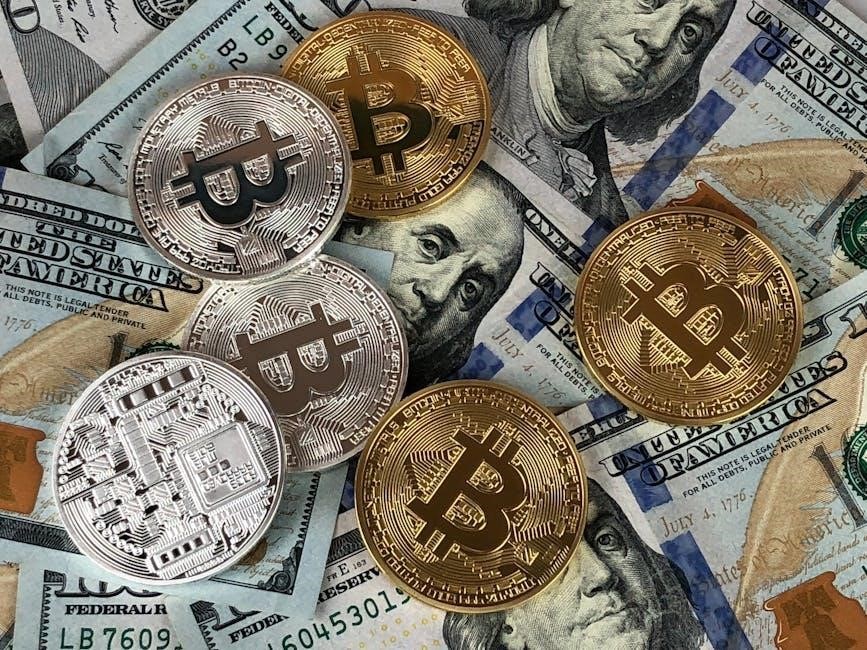
Financial regulation stems from the inherent risks within financial markets and institutions, as explored in comprehensive textbooks and available in PDF formats.
Historically, crises have demonstrated the need for oversight to prevent systemic failures and protect consumers.
Key justifications include mitigating information asymmetry – where some parties have more knowledge than others – and reducing moral hazard, where increased protection encourages excessive risk-taking.
Regulation aims to ensure fair practices, prevent fraud, and maintain the integrity of the financial system.
Furthermore, it seeks to promote competition and prevent the concentration of power within a few institutions.
The analysis of past events, like those detailed by Reinhart and Rogoff, underscores the importance of proactive regulatory measures.
Ultimately, effective regulation fosters confidence and supports sustainable economic growth.
Key Regulatory Bodies (SEC, Federal Reserve)
Several bodies oversee financial markets and institutions, as detailed in resources like Financial Markets and Institutions textbooks and accessible PDF documents.
The Securities and Exchange Commission (SEC) primarily regulates securities markets, ensuring transparency and preventing fraud in the trading of stocks and bonds.
Its focus is on protecting investors and maintaining fair, orderly, and efficient markets.
The Federal Reserve (often called “The Fed”) plays a crucial role in monetary policy, supervising banks, and maintaining financial stability.
It acts as a lender of last resort and manages the nation’s money supply.
These agencies, alongside others, work to enforce regulations and mitigate systemic risk, contributing to a robust financial system.
Understanding their roles is vital for navigating the complexities of modern finance.
Impact of Regulation on Financial Stability
Financial regulation, extensively covered in Financial Markets and Institutions materials – including textbooks and PDF resources – significantly impacts market stability.
Effective regulation aims to prevent excessive risk-taking by institutions, reducing the likelihood of financial crises.
Rules governing capital adequacy, liquidity, and risk management are crucial for safeguarding the system.

However, overregulation can stifle innovation and economic growth, creating unintended consequences.
The balance between fostering stability and promoting efficiency is a constant challenge.
Post-crisis reforms, like those following 2007, demonstrate the ongoing effort to strengthen the financial framework.
Ultimately, well-designed regulation enhances confidence and supports long-term economic health.

Recent Trends in Financial Markets
Financial Markets and Institutions are experiencing rapid change, detailed in current PDF resources and textbooks.
Fintech disruption, globalization, and the rise of alternative investments are key trends shaping the landscape.
Fintech and Digital Disruption
Fintech, a portmanteau of “financial technology,” is profoundly reshaping Financial Markets and Institutions, as detailed in numerous PDF reports and contemporary textbooks.
This disruption encompasses a broad spectrum of innovations, from mobile payment systems and automated investment advisors (robo-advisors) to blockchain technology and peer-to-peer lending platforms.
These advancements are increasing efficiency, reducing costs, and expanding access to financial services, particularly for underserved populations.
Events like Fintech (2025) showcase these cutting-edge innovations.
Traditional financial institutions are responding by investing heavily in their own digital capabilities and collaborating with fintech companies.
However, this digital transformation also presents challenges, including cybersecurity risks, regulatory uncertainties, and the potential for increased competition.
Understanding these dynamics is crucial for navigating the evolving financial landscape.
Globalization of Financial Markets
The Globalization of Financial Markets, extensively covered in Financial Markets and Institutions textbooks and accessible in PDF formats, signifies an increasing interconnectedness of financial systems worldwide.
This integration is driven by factors like reduced trade barriers, advancements in communication technology, and the liberalization of capital flows.
Consequently, capital can move more freely across borders, enabling investors to diversify their portfolios and companies to access funding from a wider range of sources.
However, globalization also introduces new risks, such as increased systemic risk and the potential for rapid contagion during financial crises.
AFF 2026 promotes networking for global financial leaders, reflecting this interconnectedness.
Effective regulation and international cooperation are essential for managing these risks and ensuring financial stability in a globalized world.
Rise of Alternative Investments
The Rise of Alternative Investments, detailed in resources like Financial Markets and Institutions – often found as PDF documents and comprehensive textbooks – represents a significant shift in the investment landscape.
Traditionally, investors focused on stocks and bonds, but now, assets like hedge funds, private equity, and real estate are gaining prominence;
This trend is fueled by a search for higher returns in a low-interest-rate environment and a desire for portfolio diversification.
Fintech innovations are also facilitating access to these previously exclusive investment options.
However, alternative investments often come with higher fees, lower liquidity, and increased complexity.
Understanding the characteristics and risks associated with these assets is crucial for investors, as highlighted by ongoing discussions at events like AFF 2026.